
For some time now I’ve been poking around a subject that excites me enormously: the evolution of computing into space. How could I not like it: it reconciles the present me (interested in details, in computing technologies, in automation, in innovations), the teenage me (with his passion for physics), and the child me (space! The stars!). Still, it remained a private and relatively superficial interest.
When, however, a wave of hype recently exploded and swept over LinkedIn and the newspapers, and not a single space science communicator came out of it unscathed, I thought it was the right time to try to put some thought into it and tidy up the chaos of news, true, false, superficial, distorted and manipulated.
Let’s start here; I’m not sure it’s exactly the beginning but it’s a good candidate. Elon Musk, in an interview in February, talks about how, in his view, very shortly (30-36 months) the most cost-effective place to put AI will be space. This is the interview, if you’re interested: https://www.dwarkesh.com/p/elon-musk, and, incidentally, it’s in the first few minutes. If you set aside the time frame, probably absurd as usual, what he’s saying is that in the US and Europe energy production is fairly constant over time, simply growing slightly. In China it’s growing quickly, but it’s the only place where it is. On top of that, in the West, the time needed to complete a data center’s grid connection can reach up to 7 years between bureaucracy and construction, against the 2 it takes to build the data center (https://www.reuters.com/sustainability/boards-policy-regulation/power-grid-delays-challenge-amazons-data-center-expansion-europe-2026-02-03/).
Given that building things that give you energy, and the grid to distribute it, is expensive, slow and bureaucratic, if you want to do a lot of AI, where can you get the energy from? In space, with the right orbit, you have sunlight almost all the time, and the panels are more efficient too.
Personally I believe what he meant is that on Earth, in the West, it won’t be possible to produce enough energy in the right time frame to keep up with the growth in demand, and so space will be the only possible place, the only viable outlet. Which doesn’t mean it will be easy or cheap.
Well, this then drove everyone mad for months. Because space is an economically hot place, a frontier, almost unexplored and with few rules, and as a consequence it attracts money and adventurers. Physics, however, is not a matter of opinion.
The Physics of Data Centers in Space#
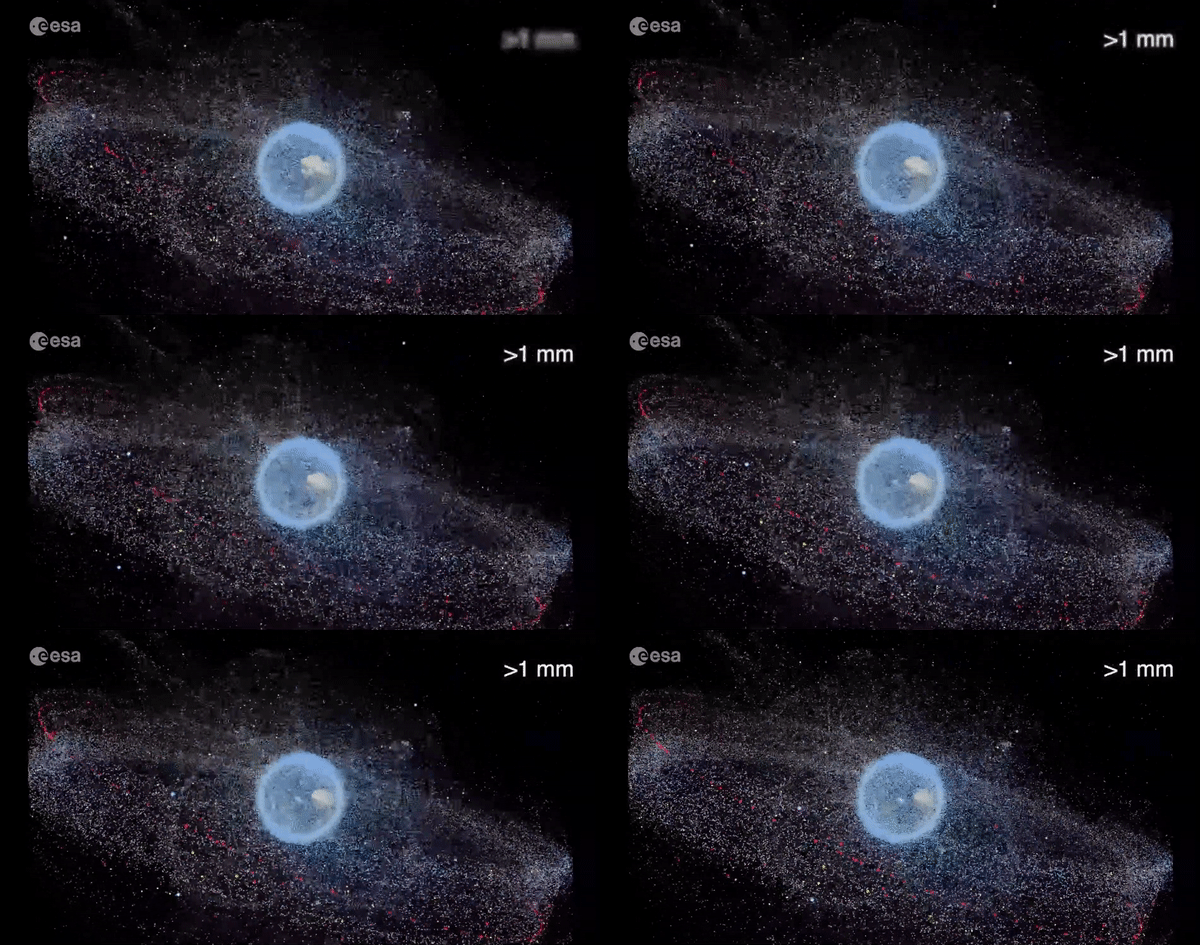
Space, fascinating as it is, is an extremely different place at a fundamental level from the one we’re used to on the ground. Even staying in low orbit and relatively close to Earth, the temperature when something is hit by the sun is as much as 200°C above zero, while in the shade it gets to more than 100°C below zero. Solar radiation, due to the sun’s nuclear reactions, is not filtered by the atmosphere. In orbit around Earth you’re in microgravity conditions, so things “float”. Depending on where you are you may have small and large debris of human origin (for example, fragments of rockets or of old satellites), or micrometeoroids. To carry things into space you use rockets, larger or smaller, which in any case put considerable stress and vibration on whatever is being carried into space. Less important (at least, in my opinion and as long as you stay in orbit around Earth) but still to be considered are distances, between satellites and Earth but also between one satellite and another.
Debris#
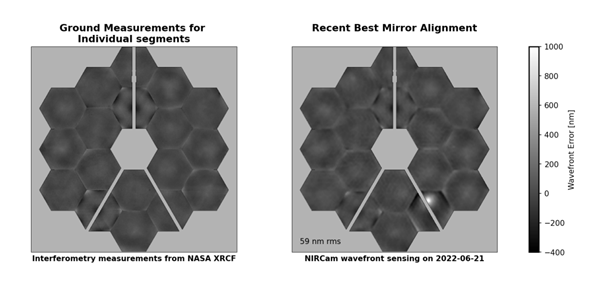
Let’s start with debris: small rocks, dust or remains of other space missions, which travel extremely fast in orbit and, if they hit a satellite, break things or at the very least damage them. It’s not a remote possibility, it’s a real problem: the JWST was hit by a micrometeoroid (a tiny pebble), which bent a mirror, so it had to be recalibrated (and that was only possible because it had been designed to allow it).
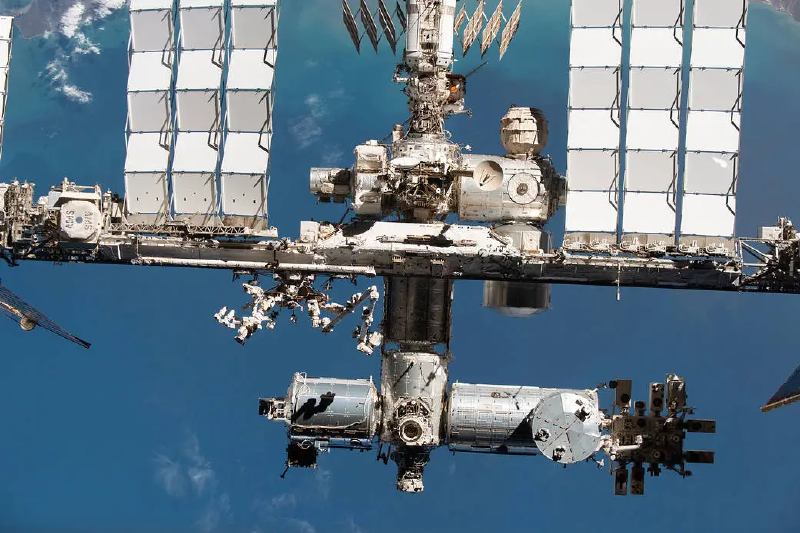
The ISS, the International Space Station, is forced to perform manoeuvres relatively often to avoid debris that is known to be on its way. Some scenarios talk about square kilometres of solar panels: will the manoeuvres be daily? Will it be possible to carry them out without doing damage, given the size? I don’t have an answer, maybe it’s all easy, in any case it’s a first problem to solve.
Radiation#
There’s radiation, which up there our blessed atmosphere is no longer around to stop, and which does a great deal of damage to electronic instruments. Historically, every device in space has been designed to be radiation-hardened; it’s not, as they say, “off the shelf” stuff that you pick up from the big server warehouse and send into space. The cost with this approach is therefore much higher, and in any case there are problems, as far as I know. The new players are changing approach: SpaceX fits commercial solar panels on Starlink and Starcloud has sent a stock H100 into orbit, both accepting a shorter useful life (I’ll come back to this in the second part). Electronic equipment bombarded by radiation, if not purpose-designed, not only deteriorates, but it’s also possible for the value of bits to be altered. On Earth it’s rare but not impossible. In space there’s more radiation; if not shielded properly, are circuits subject to more problems of this kind? Probably yes, and this is a second problem to solve.
Heat Dissipation#
The last big, enormous problem I want to talk about is that all electronic equipment produces heat, some more, some less (and the GPUs used for AI far more than the rest), but to work well it has to stay within a certain temperature range (wider in the case of space equipment, but still below 125 degrees, in theory): as a consequence it needs cooling, and therefore a cooling system. In space there’s no air or water to conduct heat and thus disperse it (from this point of view, the vacuum is an insulator), so the only physical principle left is thermal radiation, which cools more the more surface area you have available. The hotter the electronic component gets, the more surface area you need. The more surface area you need, the more material you have to carry into orbit. The more material you carry into orbit, the more you pay. And here we already start touching on the second big limit (though not a physical one) of this story, namely money.
Note: I’ve seen all sorts of opinions and calculations on the subject of heat dissipation in space. As far as I understand it, it seems to be generally feasible (even if it requires carrying more material into orbit). Apparently there are some prototypes tested on Earth with a radiative capacity far higher than the current one, but they’re prototypes, so at best we’re looking at the future.
This article was translated from the Italian original with the help of AI (Claude) and reviewed by the author.