
In the first two parts I talked about physics, costs and maintenance, that is, the reasons why a data center in orbit is difficult. In this third and final part I look at what is really out there today, and at what I think is going on behind the announcements.
The Race#
I have already started mentioning, here and there, some of the characters in this story in its early days: SpaceX, Google, Starcloud, China. However, after the physics, the money and the maintenance problems, it is time for the ultimate question: but today, what is there?
And the answer is: very little. Lots of words, lots of announcements, lots of positioning, not much substance. Or at least, not much substance for, as they say, nerds like me.
So little, in fact, that I can make a bullet list, trying to separate the mountain of marketing smoke and mirrors from what is actually being done.
- Starcloud: so far they have sent up a satellite with one GPU (an Nvidia H100) for AI processing as a PoC (https://www.datacenterfrontier.com/site-selection/article/55337494/starcloud-launches-orbital-ai-data-center-with-nvidia-h100-gpu). A successful PoC (training a NanoGPT model on board initially, but also inference contracts on satellite imagery), but still only a PoC. The company, apparently, is also funded by Nvidia.
- The initial model in Starcloud’s 2024 whitepaper (https://starcloudinc.github.io/wp.pdf) envisaged a single gigantic satellite, 4 km x 4 km of solar panels and radiators, to get a 5 GW data center, comparable to a current data center on Earth. Now instead, without having changed its original claim on the website, it seems to have applied for authorisation to send 88,000 satellites into low orbit. The sources contradict each other here: the FCC application for the 88,000 satellites states the same 5 GW target, so it would be the architecture that has changed and not the goal, while other analyses from 2026 still describe Starcloud as a modular station. In any case, I imagine the individual satellites will be less powerful.
- The company seems to have a second launch planned by the end of 2026 and customers starting in early 2027. I would say it is an active, functioning company, albeit in a pioneering field.
- Lonestar Data Holdings: an interesting company that aims to put storage for backup and disaster recovery on the Moon and in space (https://www.lonestarlunar.com/). Not computing power, but a data center nonetheless. The original idea was to leverage the future Artemis infrastructure to bring this commercial service, but I believe it is now going ahead independently of Artemis, given the problems. Moreover, as of 2026 it seems to have shifted its focus from the Moon to space, with a series of satellites with ample storage that should in theory work as Data Embassies, that is, keeping the data under the residency of its owner (if the data is written by the government of Florida, the data remains theirs, for example; I discussed this better here: Rethinking Cloud Sovereignty and Resilience).
- In early 2024, with the “Independence” mission, it sent a first PoC to the Moon, with which it tested data transmission, managing to correctly write and read the United States Declaration of Independence. In early 2025 it sent a real 8 TB SSD and they ran a series of tests (despite the problems with the lander, which tipped over). No further launches are currently planned for this project.
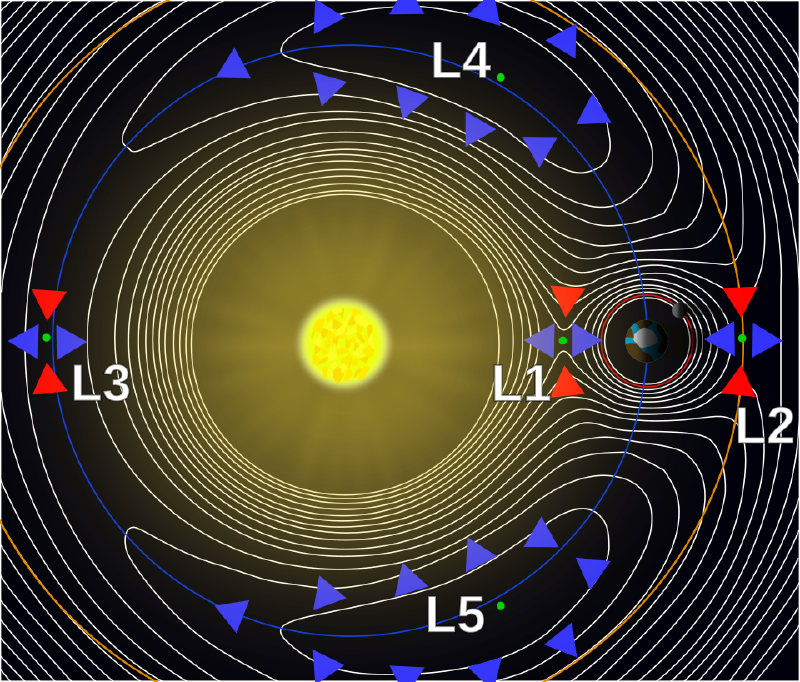
- For 2027 two different launches are planned for the StarVault programme: one into low orbit (https://www.linkedin.com/pulse/first-orbital-sovereign-ai-model-alex-wissner-gross-jacdc/) and one (part of a constellation of 6 satellites) into orbit at the L1 Lagrange point with a capacity of 15 PB that should grow over time (https://www.fierce-network.com/cloud/moon-next-frontier-data-center-cowboys).
- The long-term plans are hugely ambitious (perhaps too much so, it looks more like spectacular marketing): data centers at the L4 and L5 Lagrange points, on the Moon in lava tubes (https://spectrum.ieee.org/data-center-on-the-moon).
- Interesting idea, they have readjusted the plan from the Moon to space, perhaps a bit too much wishful thinking.
- Axiom (but also Kepler): here two layers intersect, and I will now try to untangle their interactions.
- From what I understand, Kepler wants to put into orbit a kind of optical repeaters or routers that facilitate communication between satellites. On board each satellite there is also some computing hardware, apparently 4 Jetson Orin modules per satellite (https://www.nvidia.com/en-us/autonomous-machines/embedded-systems/jetson-orin/). These are embedded AI boards, with good computing power, but we are certainly a long way from data centers. In January 2026 the first 10 satellites were put into orbit (https://kepler.space/kepler-successfully-launches-first-tranche-of-optical-relay-satellites/).
- At the same time Axiom is working on its “Orbital Data Center” (ODC - https://www.axiomspace.com/orbital-data-center), which it conceives from the outset as distributed and with several nodes. After some “tests”, Axiom bought from Kepler the computing power in these satellites to host its workload, that is, the first two nodes of its Orbital Data Center (https://www.axiomspace.com/release/axiom-space-to-launch-orbital-data-center-nodes-to-support-national-security-commercial-international-customers). The third node, planned for 2027, is reportedly to be installed on the ISS. Further expansions are planned in the following years, with no dates.
- Despite its small size, this seems to me the most serious, practical and advanced thing in the West. For the next few years, barring revolutions (see SpaceX Starship), I believe the evolution will go in similar directions.
Interesting that the first experiment was an AWS Snowcone taken to the ISS in 2022 - https://aws.amazon.com/blogs/aws/how-we-sent-an-aws-snowcone-into-orbit/. Let’s be honest, little more than a game and marketing, but it is still a nice experiment to understand whether latency could be a problem.
- Three-Body Computing Constellation: this is 12 satellites (https://spacenews.com/china-launches-first-of-2800-satellites-for-ai-space-computing-constellation/), launched by the commercial company ADA Space/Guoxing Aerospace, which builds the satellite platforms, and operated by Zhejiang Lab, a semi-state research institute, from what I understand co-founded by the Zhejiang government, Zhejiang University and Alibaba, which handles the AI models on board. For some reason I can’t fathom, they have two different narratives: for Zhejiang Lab it is research infrastructure, for ADA Space/Guoxing Aerospace it is the “Star-Compute Program”.
- The 12 satellites were tested extensively for 9 months, and the network link between satellites was demonstrated among 6 of them; further launches are planned for 2026, but commercial use at scale (a thousand satellites) is planned by 2030.
- They have 10 AI models on board, validated in orbit; ADA Space also launched in March 2026 a commercial cloud product aimed at businesses called “Prometheus”, although from the source it is not clear whether and how the two things are connected (http://www.china.org.cn/2026-04/26/content_118463824.shtml).
- There was also a demonstration (so let’s take it for what it is: a demonstration) in which a humanoid robot was piloted through natural-language commands processed on the satellite (https://www.news.cn/tech/20260408/b0b6a0ccd4f14902b7c31383215ffdf4/c.html).
- Let’s be clear: at the moment the Chinese bloc seems to be ahead of the American one, with a working constellation and a commercial cloud product already launched (a space cloud, incredible). Two caveats, though. The first: the sources on Prometheus and on the demonstration are state media (Xinhua, china.org.cn) and I have found no independent verification. The second: it seems to be little more than a prototype; twelve satellites are something, small but something; the scales being talked about, however, are radically different.
Everyone else, ladies and gentlemen, is for now just talking. Big talk, a few documents, but above all POSITIONING. Yes indeed, because there is an important point we have not mentioned so far. For these orbital data centers to be cost-effective, they must be able to use particular polar orbits that allow the solar panels to be exposed to the sun almost uninterruptedly. These orbits are few, and can host a limited number of satellites. And this explains most of the big announcements and the reservation requests for thousands and millions of satellites in the most suitable orbits. In fact, SpaceX with its million AI1, Blue Origin with its 51,600-satellite Project Sunrise, Orbital Inc and its 100,000 satellites, Starcloud and its 88,000, are all the same thing: attempts to grab as much as possible of a scarce resource. Moreover, and this is my own comment, without taking into account Europe (which is, however, as always and as with everything that is frontier technology, very far behind), and above all China, which have their own plans. For this reason, I have decided to give them limited weight: they are big numbers, but no practical plan of action.
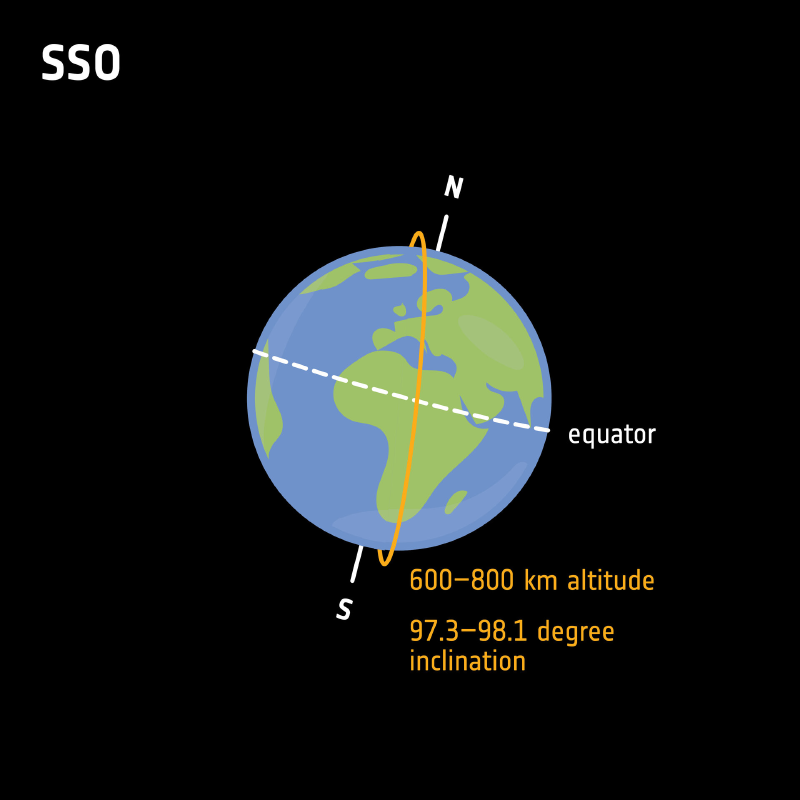
Careful not to misunderstand what I mean. The fact that all these companies have filed these mountains of applications is relevant in and of itself, it is a manifestation of how fundamental those orbits are thought to be, as of now. What I believe (my opinion, for goodness’ sake, I am open to changing my mind when I see something) is that for the most part these are grandiose projects thrown together in a hurry in order to file the application and thus reserve the orbits, not to reserve the orbits so as to be able to deploy their grandiose projects.
Orbital reservations are managed by a supranational body that is part of the UN, the ITU (International Telecommunication Union - https://www.itu.int/en/mediacentre/backgrounders/Pages/Non-geostationary-satellite-systems.aspx), which perhaps the sysadmins among you will already know for its ITU-T section, which deals with standardising telecommunications (X.509 used for certificates, H.264 for video compression, XGS-PON for fibre-optic communications).
Applications to this body, from what I have read, must be submitted by the various national telecommunications administrations. All those big American companies have sent their request to the FCC, which is evaluating them and must then forward them to the ITU-R, the section of the ITU that deals with radiocommunications and therefore also with the orbits in which to put satellites.
From what I understand, no application of this kind for this orbit has yet been forwarded as of today (October 2026), and only a few have actually been filed.
The Reality#
If you have made it this far you will have understood my opinion by now. I believe that this whole story of data centers in space in the short term (3 years, in Musk’s words) is at best a dream and at worst a gigantic red herring hiding the real objective of reserving the orbits for the future, with probably a bit of chaos added in generous doses to justify the gigantic AI funding. The reality is probably something that contains watered-down doses of all these themes and of others that will inevitably have escaped me.
What is true is that more and more computing power is indeed being put into space. But it is being put where it gives the most advantage, that is, in processing raw data on the satellite rather than on the ground. The reason is once again a physical limit slightly different from those I mentioned in the first part: the data transmission speed from satellites to the ground is very low, and this is made worse by the trivial fact that satellites move, they orbit around the Earth, and therefore connect to the same ground station (which is fixed instead) only for a short time, say between 5 and 7 minutes on average, on an orbit that lasts about 90-100 minutes.
Bandwidth#
The standard communication speed of Earth observation satellites is in the order of 350-520 Mbit/s (Landsat 8: 384 Mbit/s - https://www.usgs.gov/publications/design-and-implementation-next-generation-landsat-satellite-communications-system; Sentinel-2: 520 Mbit/s). Each satellite is slower than a good home connection that in Italy I can get with a 30-euro-a-month subscription (well, let’s say if I live in a city). If we talk about more distant research satellites it drops even further.
This low speed is managed, of course. Generally missions and the data collected by the satellite are sized so that everything can be transmitted to the ground, or the data is compressed (Sentinel-2 does this, for example - https://dataspace.copernicus.eu/data-collections/copernicus-sentinel-missions/sentinel-2), or pre-processing is done directly on the satellite (the Gaia mission, for example, automatically crops the image to just the area around the observed star).
The situation is improving. There are new technologies and experiments, first among them Starlink’s optical communication technology, which with a laser allows third-party satellites to hook into the Starlink network at up to 25 Gbit/s and up to 4,000 km away (the links between Starlink satellites themselves reach 200 Gbit/s - https://starlink.com/technology), which goes hand in hand with the Starlink V3 technology that makes it possible to transmit 2,048 communication beams to the ground at up to 1 Tbit/s. These are consumer communications, but it is still a big leap forward. NASA is running experiments and putting out tenders to find better methods. We are still, however, a long way from ground transmission speeds.
In this context a strong boost to on-board processing is taking hold, generally with the idea of doing pre-processing on board the satellite to quickly identify interesting signals or cut out useless information. Some practical examples, reported by ESA itself (https://commercialisation.esa.int/?p=2553 - from 2022, but the use cases can only have expanded):
- in Earth observation satellites, immediately discarding images covered by clouds. According to ESA over 30% of Sentinel-2 images are covered by clouds (https://en.wikipedia.org/wiki/Phi-Sat-1, which cites the ESA document): noticing this means having cut a third or more of the transmitted data.
- in satellites looking for thermal signatures to detect wildfires, the raw image or images are not sent, only the coordinates or the map. You go from megabytes, gigabytes or more down to kilobytes with single precise pieces of information (OroraTech does exactly this: https://fireandsafetyjournalamericas.com/ororatech/).
In general, the computing power actually brought into orbit answers the general need to process in orbit data produced in orbit.
In Conclusion#
I’ll be honest: the story of data centers in space was an excuse to immerse myself once again in a field that has fascinated me enormously since I was a child and to explore how it has grown, how it has evolved, to travel in my mind through space alongside a satellite; but to do so with my adult mind, which tries to understand reality better, tries to understand how concrete and mundane problems shape the growth and evolution of a field, and how computing is transformed when it collides with particularly different environments and situations.
Running computations in space has been a reality for a long time, only in particularly specific ways (namely, edge computing), yet humanity is slowly solving or mitigating all the problems that have limited us so far. And if putting a data center in space is a certainty, but probably 20 years in the future, it is just as certain that we are getting to that future, one small problem solved at a time.
This article was translated from the Italian original with the help of AI (Claude) and reviewed by the author.